Impact Research & Analysis
Our Services
Ecosystem & Landscape Mapping: "Where are we standing?" We map the "rules of the game"—the government policies, power dynamics, and sector gaps. By identifying exactly where the ground is shifting, we ensure your strategy is built on the reality of the current landscape, not on outdated assumptions.
Foresight & Strategic Navigation: "Where are we going?" Sustainability is about long-term survival. We use technology foresight to help you "look around the corner" at shifting trends and emerging innovations. This allows you to proactively pivot your resources, future-proofing your mission before the world changes around you.
Compliance & Global Standards: "Are we allowed to be here?” We align your strategy with international benchmarks (like ESG or SDGs) and emerging local regulations. This provides the technical rigor needed to ensure your project remains compliant, "bankable," and attractive to global donors as standards tighten.


Organic Transition & Climate-Resilient Rice Cultivation
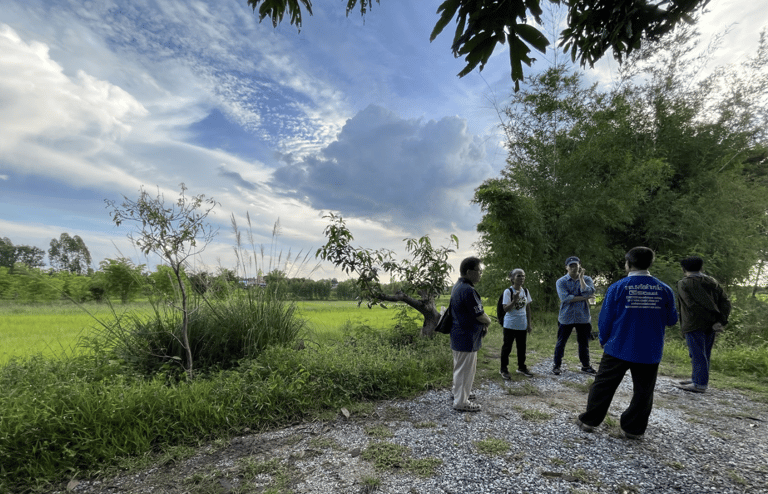
We investigated the systemic barriers to organic rice adoption in Northeastern Thailand to understand why transitions to sustainable farming remain a significant challenge for local communities. Our research focused on the "Adoption Gap" where traditional rice farmers face increasing climate risks, specifically more dramatic but geographically scattered rainfall patterns. By performing a comparative field analysis between conventional and organic rice plots, we identified the specific socio-economic and technical friction points preventing large-scale transition. This study was supplemented by deep-dive interviews with both local farmers and academic professors to bridge the gap between "on-the-ground" field realities and theoretical agricultural models.
Furthermore, our research evaluated a new pilot for "less water" rice planting innovations designed to mitigate climate-induced water stress. As rainfall patterns shift toward irregular and intense bursts, our analysis validated the viability of these low-water cultivation models as a scalable solution for maintaining food security.
The Impacts
Diagnostic Clarity: Provided a clear evidence-based map of the socio-economic and technical friction points that currently stall organic transition at the farm level.
Our Impacts
Sponge City Application for Chiang Mai
We analyzed the local context to identify how a "Sponge City" model—designed to absorb, store, and purify rainwater—could be specifically applied to Chiang Mai. Our research focuses on reversing the systemic "concretization" that has stripped the city of its natural resilience. We found that a key factor of Chiang Mai’s flood risk is a direct consequence of unregulated urban expansion and policy lapses, specifically a seven-year vacuum in zoning enforcement between 2006 and 2013. This period allowed unregulated construction to replace natural, flood-absorbing wetlands with concrete, leading to devastating events like the October 2024 flood where the Ping River peaked at 5.30 meters. Furthermore, our evaluation revealed that current "top-down" grey infrastructure priorities, such as diversion tunnels and river dredging, fail to manage the decentralized surface runoff that plagues residential zones.
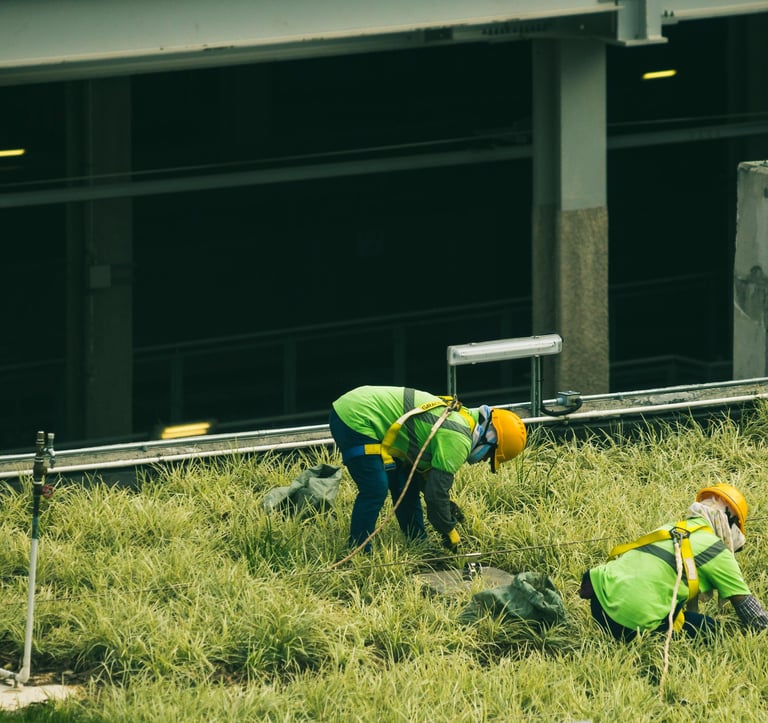
Our research identified a strategic way to bridge the gap between these centralized grey solutions and "bottom-up" nature-based interventions. With an Aging Index of 126.4, Chiang Mai’s "completely aged" society is disproportionately affected by climate disasters that trap seniors without access to food or medicine. However, we identified this demographic as a vital workforce rather than a liability; active seniors represent a "Silver Capital" asset capable of providing the essential maintenance layer that green infrastructure requires to survive. To operationalize this, we mapped 15 pilot "Micro-Sponge" Hubs across temples, schools, and government offices to serve as community-based centers that capture runoff at the source while providing intergenerational learning grounds.
The Impacts
Designed a Intergenerational Resilience Model: Successfully reframed the 50+ demographic from "passive victims" to indispensable "Climate Assets" responsible for the city’s ecological restoration and disaster monitoring.
Our Partners